
Bangladesh Embassy, Nepal observes National Revolution and Solidarity Day
 अनलाइनसमय |
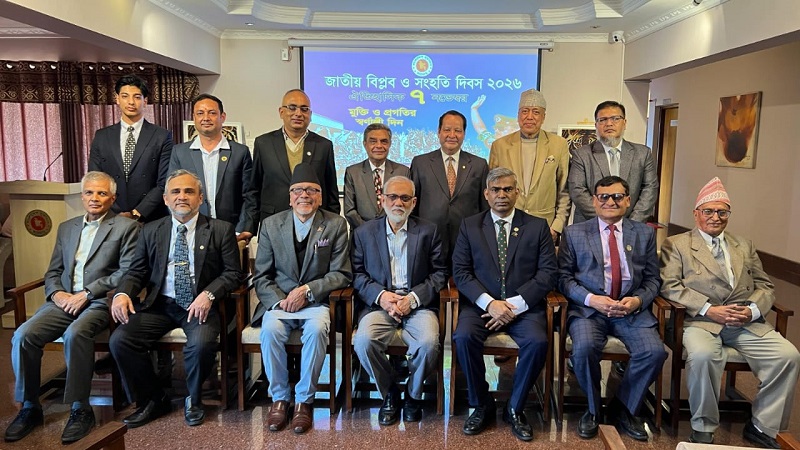
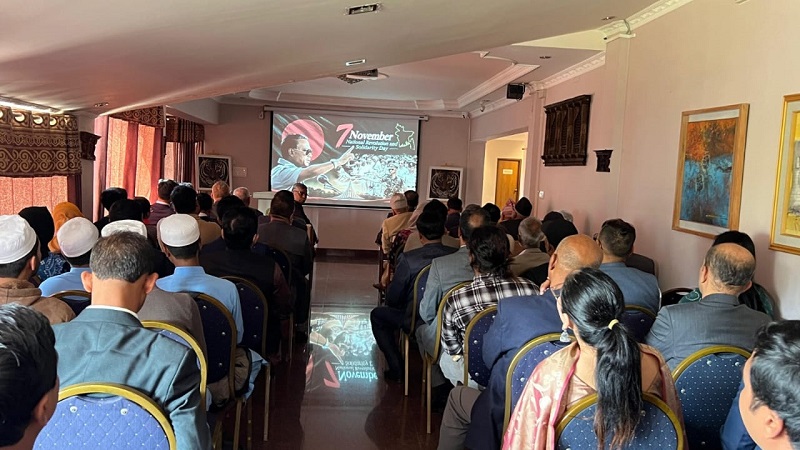
Kathmandu, 07 Nov: Bangladesh Embassy, Kathmandu observed the National Revolution and Solidarity Day in a solemn and befitting manner at Embassy premises today. The event commemorates the historic 07 Nov. 1975 and its significance in the history of Bangladesh.
The program began with hoisting of the national flag of Bangladesh at the Embassy premises in presence of a sizable community. Then followed by a program in the Embassy auditorium, including playing national anthems of Bangladesh and Nepal, remarks by speakers, special prayers seeking salvation of the martyrs, continued peace and prosperity of the country. Messages from Hon’ble President and Hon’ble Prime Minister of Bangladesh on the occasion of the Day, were read out. Two documentaries highlighting the historical background and significance of the Day were also screened.
During the discussion session, the speakers reflected on the historical significance of 07 November and its contribution to the nation-building process and the political history of Bangladesh. They recalled the role of Shaheed President Ziaur Rahman in restoring multiparty democracy, freedom of expression and the press and highlighted his critical role in preserving the national unity, sovereignty and people’s collective aspirations in safeguarding the country’s independence and democratic journey.
In closing remarks, Ambassador Shafiqur Rahman underlined the importance and relevance of 07 November 1975 in our national life. Describing the event as a turning point in the country’s political history, he recalled that Shaheed President Ziaur Rahman, Bir Uttam, the Proclaimer of Independence, was freed from captivity by the fellow soldiers and mass people on the day, and later he was entrusted with the responsibility of steering the nation out of a profound crisis. He stated that the emergence of President Ziaur Rahman as the national leader, led to the restoration and protection of the country’s independence and sovereignty and the establishment of rule of law.
The Ambassador also highlighted the critical role and enduring legacy of President Ziaur Rahman as the pioneer of production-oriented politics in Bangladesh- a strategic shift from rhetoric-driven politics and ‘‘Bangladesh First Policy’ by introducing the principles of Bangladeshi nationalism in its policy formulations and by externalizing our national issues in the global forefront. Emphasizing the spirit of national unity, solidarity and patriotism, he called upon the expatriate community to extend support to the government in its effort to strengthening national institutions, building infrastructures, improved connectivity and above contributing to national development,
The event was attended by around 100 guests including former Ambassadors of Nepal to Bangladesh, faculty members of the University of Dhaka, prominent members of the Nepali business community, representatives of SAARC, ICIMOD and other organizations, as well as members of the Bangladeshi community residing in Nepal.
ताजा समाचार