
Bangladesh Embassy in Kathmandu Observes Second Anniversary of July Mass Uprising
 अनलाइनसमय |
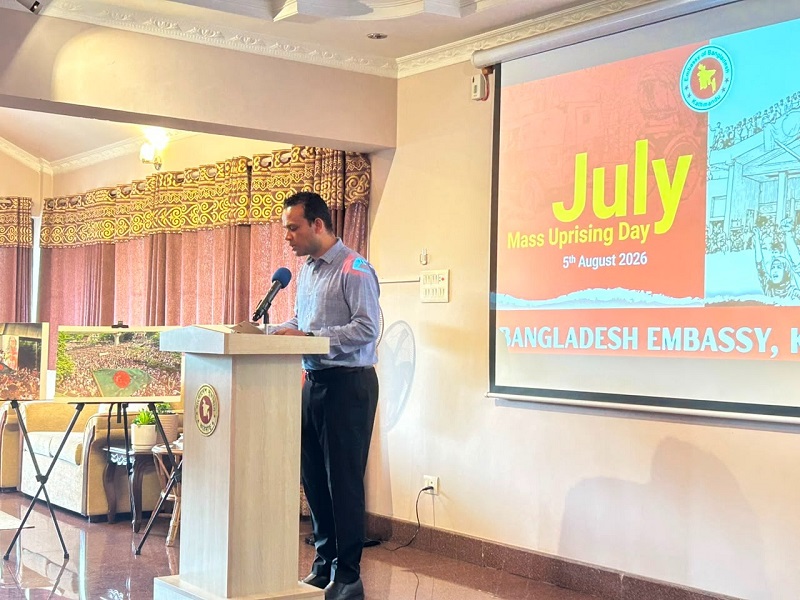
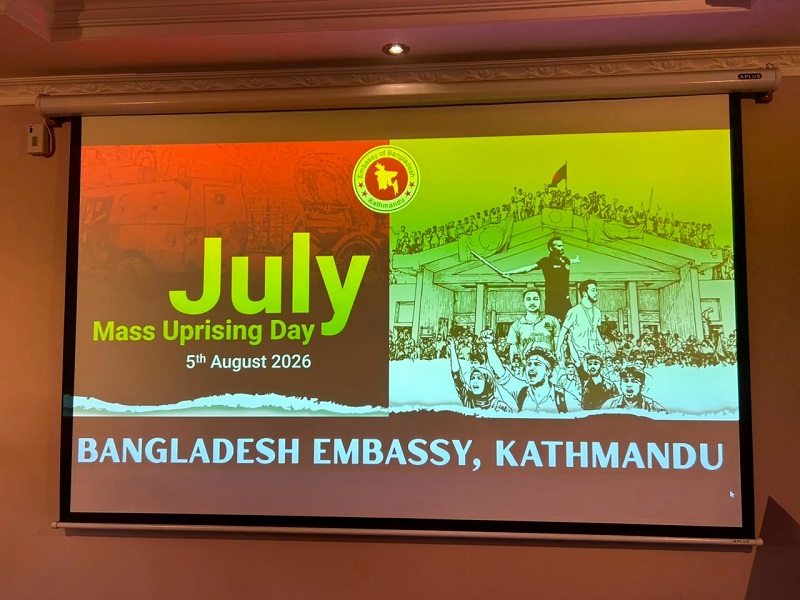
KATHMANDU : 8 August, The Embassy of Bangladesh in Kathmandu commemorated the second anniversary of the historic July Mass Uprising with a solemn ceremony on its premises.
The event was attended by members of the Bangladeshi diaspora in Nepal, representatives of regional institutions including the SAARC Secretariat and ICIMOD, civil society members, think tanks, and youth representatives from Nepal’s Gen-Z community.
The program commenced with a minute of silence observed in honor of the martyrs of the uprising, followed by a special prayer session. Official messages from the President, Prime Minister, Foreign Minister, and State Minister for Foreign Affairs of Bangladesh were read out during the proceedings, accompanied by the screening of documentary films detailing the July movement.
Professor Dr. A. S. M. Amanullah, Vice-Chancellor of the National University of Bangladesh, attended the event as the Chief Guest. Sharing his personal experiences from the uprising, Prof. Amanullah discussed the factors that led to the widespread mobilization across all segments of society. He condemned the institutional degradation observed across administrative, academic, and financial sectors prior to the uprising and emphasized the need for political stakeholders to draw lasting lessons from the student-led movement. Highlighting the importance of an uninterrupted democratic process, he noted the National University’s ongoing efforts to enhance academic standards and expressed a desire to foster greater research and educational collaboration across South Asia, including Nepal.
Speaking as the Special Guest, SAARC Secretary General Ambassador Md. Golam Sarwar underscored the core values of good governance, public dignity, fundamental rights, and economic empowerment. Ambassador Sarwar highlighted the necessity of regional cooperation among SAARC member states to fulfill the broader democratic and socio-economic aspirations of the July movement.
In his closing address, Bangladesh’s Ambassador Salahuddin Noman Chowdhury Rahman framed the uprising as a defining milestone in the country’s democratic evolution, reflecting public demand for accountability, the rule of law, and equal opportunity. Referencing the current government’s “Bangladesh First” (সবার আগে বাংলাদেশ) policy framework, Ambassador Rahman affirmed that national policymaking remains focused on public welfare, self-reliance, and sustainable democratic governance.
The ceremony concluded with a reception lunch for all invited guests and participants.
ताजा समाचार